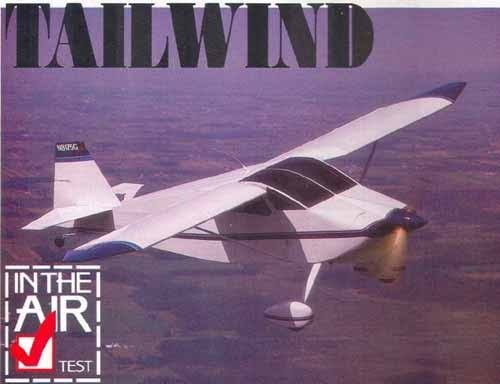

Naturally, one of the first questions people ask after finding out I plan to build my own airplane is why did I choose the Wittman Tailwind? This, and why would I want to build my own plane instead of just buy one? These questions usually result in me going down a rabbit hole of why renting airplanes sucks and how “experimental” aircraft are misunderstood, and on and on until they regret ever asking. Luckily, you can stop reading now and I’ll never know the difference. But if you are actually interested, here you go.
Why build instead of rent?
The question of why I would want to build my own airplane really has two answers. The first is a logistics and financial decision.
Pretty much every pilot started flying by renting from their local flight school, usually a Cessna 152, 172, or similar Piper aircraft. That works fine at first, but you quickly realize it comes with real limits. You’re booking 2-3 weeks out to get the time slot you want. You’re crossing your fingers on weather because you don’t have the flexibility to push a flight back a couple hours. And it’s expensive, upwards of $200 per flight hour, plus extra fees if you want to keep the plane out for a while. During training you dream about weekend adventures all over the map. What actually happens for most pilots is the same 60 minute local flight over and over, with the occasional trip to a nearby airport for the classic “100 dollar burger.”
Owning your own plane fixes this, not a Tailwind specifically, just ownership in general. You’re not on anyone else’s schedule. You can fly spontaneously. No pressure to be home by a specific time. As long as the weather’s good and you’ve got gas money, you get the actual freedom you pictured when you started training. And cost-wise, total expenses per flight hour for an experimental homebuilt (hangar, maintenance, insurance, fuel, all of it) can come in well under renting, depending on the aircraft and how cheap you can find hangar spacWe. I’m anticipating flying the Tailwind for under $100 per flight hour. I’ll post a full breakdown of that math at some point.
Why build at all?
The second answer: I want the project.
I’ve enjoyed building things my entire life. I grew up working with my dad in his wood shop. After college I bought a CNC mill and spent every evening learning to program and machine parts. I love learning new skills and building cool things. I know that I don’t currently have all the skills and knowledge required to build this plane, but that’s what makes me want to do it so badly. Building an airplane also excites the engineer in me. The idea of having an intimate knowledge of how every part of my plane functions and was built sounds amazing.
So why a Tailwind, specifically?
That doesn’t really answer why I’m building a Tailwind specifically. Out of all the experimental homebuilt planes out there, why a Tailwind? To be honest, my initial criteria for what plane to build was cost. Popular kit build planes like Vans, Kitfox, and Zenith were out of my price range. I looked at the Sonex aircraft for a while but just couldn’t get excited about it. After a lot of research and looking around, someone suggested I take a look at a Wittman Tailwind.
I remembered seeing one in person before and writing it off because of its unusual, boxy appearance. It looked like someone built an airplane out of leftover sheet metal, with sharp corners and 90 degree angles. A plane shaped like that couldn’t possibly have good performance, I thought. So when this person suggested it, I figured I’d humor them, googled it, and started reading.
After a short amount of research I quickly realized how wrong I was. I came across the CAFE Foundation report on the Tailwind, which listed a cruise speed of 188 knots on 9.6 gallons per hour. A boxy little homebuilt was posting numbers that rival high performance retractable gear aircraft costing many times as much. I read that number a few times just to make sure I wasn’t misreading it. Those results were so good, that at the time people speculated it had a modified engine. Jim Clement, the builder, described the engine as being a strictly stock Lycoming O-320.
Once I got past the performance, I found the Tailwind also has a reputation for being simple and relatively easy to build. Easy may not be the right word, but between its simple geometry and basic construction methods, it can be built in almost any garage without a ton of special tooling. Cheap, fast, and buildable by one guy with normal tools in his garage. That combination is what sealed it.
I’m under no illusions this is going to be easy. I’m expecting this to take many years and to have its fair share of challenges and setbacks. Right now the plan is to start with the fuselage. Im going to spend a fair amount of time learning and sharpening my welding skills before welding the frame together, but in the meantime I can start preparing the shop space and assembling the weld fixture. I’ll be posting build updates here as I go, along with the cost breakdown I mentioned above and probably a few mistakes I’d rather not make public but will anyway. If you’re thinking about a build of your own, or you’re just curious how this goes, stick around.